
I have worked as a quality specialist in a BPO and giving and providing feedback to employees is a daily thing. I have noticed that although the task is the same, and some of the results are the same, there is really no similar experience in terms of providing feedback because of individual differences. Usually, the word feedback connotes a negative feeling thus, even before it is delivered, there is already a prejudice on the part of the employees.
The type of feedback given to employees has a major impact on their performance.
What are the types of feedback in the work place?
Constructive feedback is information specific, issue-focused and based on observation. Constructive feedback can be Negative which is corrective in nature and focuses on behavior or task that should not be repeated. It can also be Positive which affirms and encourages good behavior or task that was successful and can be repeated.
There is also what we call Praise feedback that provides positive statements about the person’s behavior/task. Most employees will respond to praise with an increase in self-esteem, self-efficacy and/or confidence.
Criticism on the other hand is a negative statement about their behavior/task. Criticism is destructive feedback and is generally not effective at increasing performance in the workplace as it may lessen employee’s confidence at work. However, this is crucial in a corporate set up and should be delivered no matter what. This impacts company’s over-all performance.
These feedback are given on a one-on-one sessions and supported by written documents.
Note that employees have also metrics that they need to achieve. It is is similar to having the learning objectives in the school setup.
What are the types of feedback in the classroom?
Giving students feedback in the classroom during the learning process has been proven to increase learning and improve student outcomes. When given correctly, feedback guides the student in their learning process and gives them the direction they need to reach the target or goal of the lesson.
Descriptive feedback is intended to tell the learner what needs to be improved. Its goal is to improve student achievement by telling the learner how to move forward in the learning process.
Evaluative feedback is intended to summarize student achievement. Its goal is to measure student achievement with a score or a grade.
Motivational feedback is intended to encourage and support the learner. Its goal is to make the learner feel good.
Feedback during learning allows students to take feedback on board immediately and to try to realize improvement during the learning process. This is often more effective and productive to the learning experience than end-of task feedback measures (usually summative), which require students to remember the feedback and apply the recommended strategies to a future task.
Too often Feedback after learning is not used by the students to improve their work. This often results in teachers making the same comments over and over again and wondering why the student has not transferred the information to another context. For such feedback to influence subsequent learning, students must remember it, translate it into advice that is transferable across tasks, and apply it the next time they encounter a task in which this learning could apply. Generally, while strong students can often do this, struggling students find it more difficult.
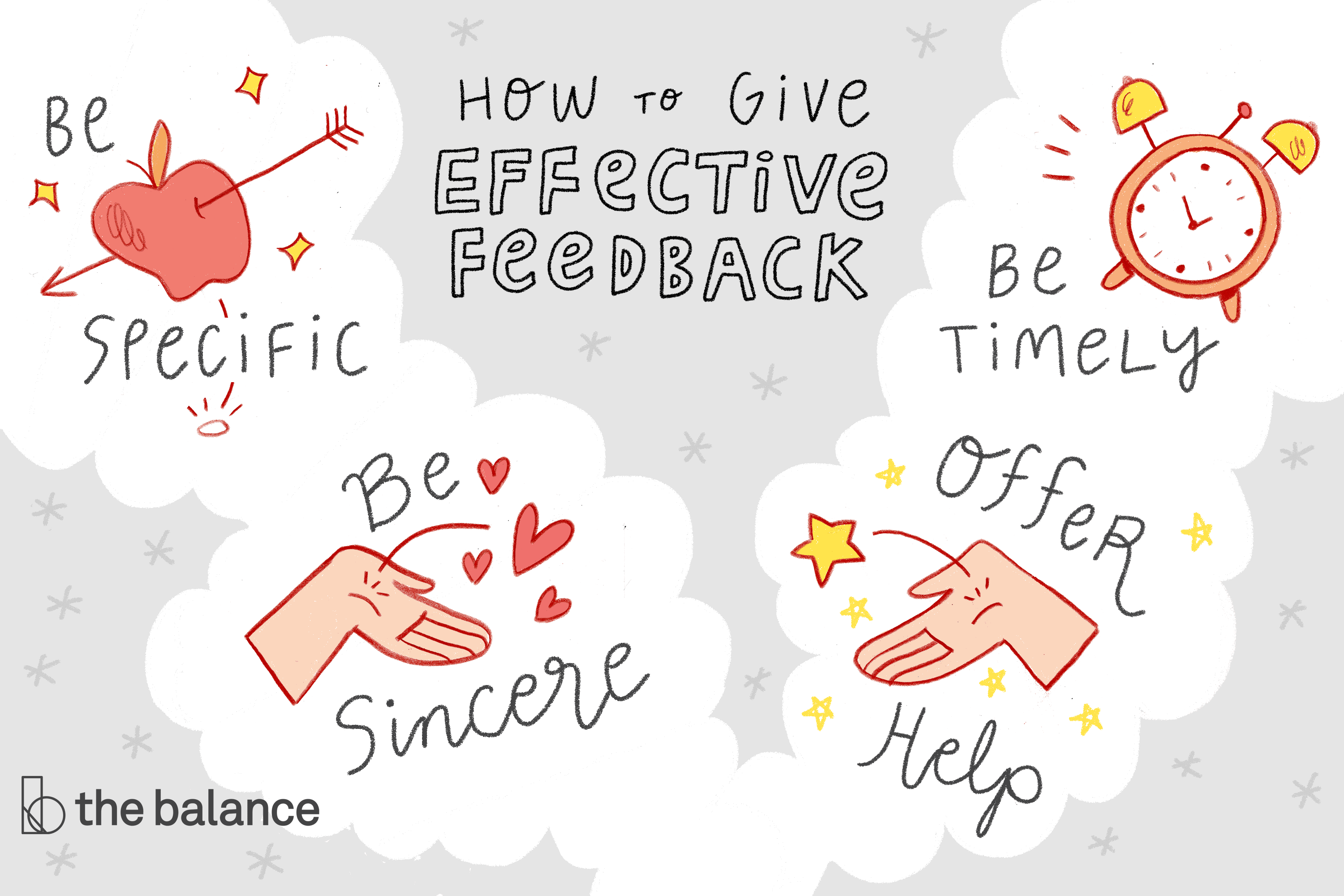
Effective feedback, whether you are giving it to employees or to students has four basic characteristics. It should be timely, targeted, tangible and tied to goals.
Timely feedback provides an ongoing information on how the employees/students are doing and how close they are to their goals. Thus, in order for feedback to be effective, it must be given PRIOR to being evaluated so that they have a chance to make adjustments, corrections, or complete changes to their performance and get closer to their ultimate goals.
Targeted feedback points to specific actions or behaviors and these have effect on reaching the employees/students’ ultimate goal or outcome.
Tangible feedback is focused on things we can actually do something about. It is actionable.
Feedback needs to have a clear connection to the professional and or learning goal and needs to show employees or students how close they are to achieving that goal and point them to the best next steps they need to take in order to achieve that goal.
References:
https://www.talkdesk.com/blog/types-and-sources-of-feedback-in-the-workplace/
http://www.ssgt.nsw.edu.au/documents/1types_feedback.pdf
https://cirt.gcu.edu/teaching3/tips/effectivefeed
https://mindstepsinc.com/2015/11/what-is-effective-feedback/



 MM Exclusive